
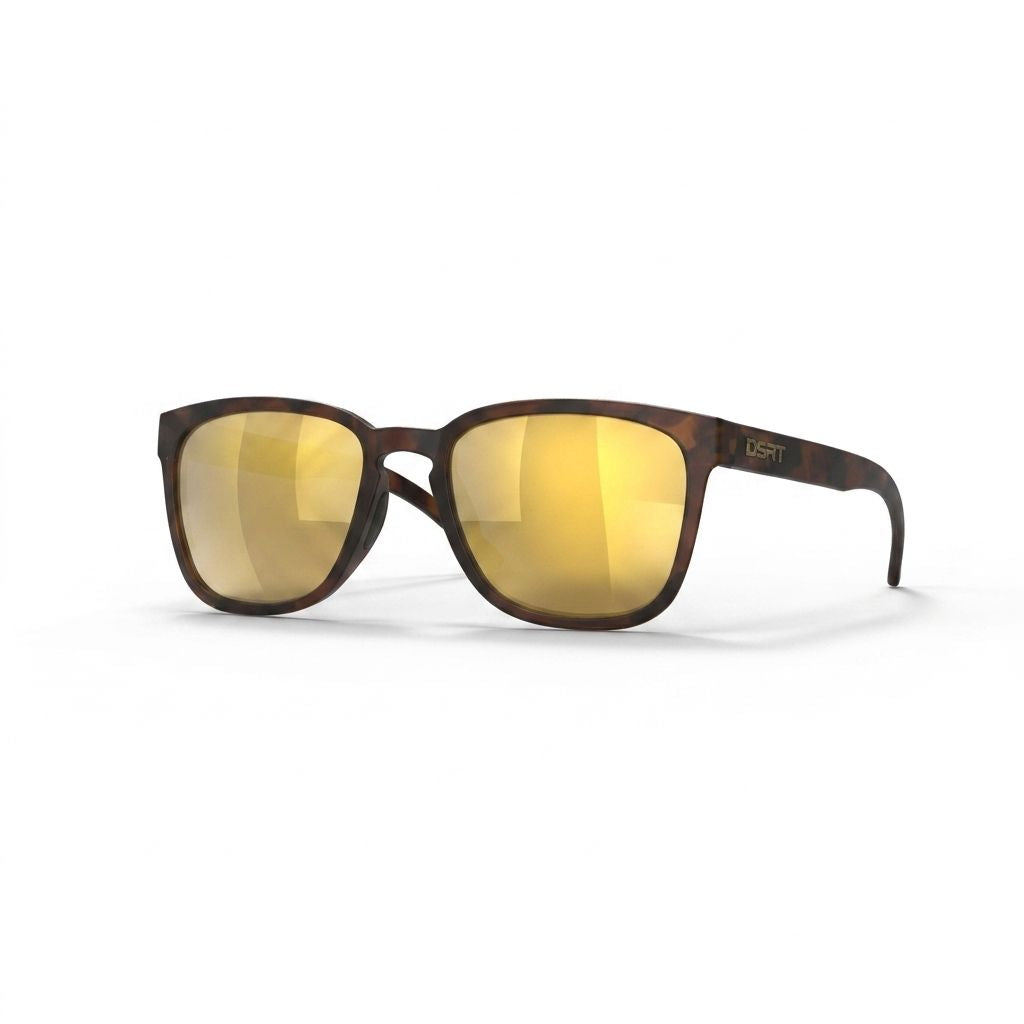
Flatiron
Safety + performance

Built for work, training, outdoor use, and everyday wear. Explore DSRT performance sunglasses with polarized lenses, durable frame materials, all-day fit, and safety-rated options for demanding environments.
Find Your Frame
Every DSRT frame is built for performance, but each one has a different job. Compare the Flatiron, Phoenix, and Sedona to find the frame that fits how you work, train, and spend your time outside.
Safety + performance
Athletic + everyday performance
Lifestyle + outdoor performance
Not sure where to start? Flatiron is built around safety and hard use, Phoenix is the athletic option, and Sedona delivers the most versatile everyday style.
Lens Technology
Lens material, polarization, UV protection, visible light transmission, and coatings all affect how sunglasses perform. DSRT uses different lens technologies across the lineup based on what each frame is built to do.
Polyamide lenses provide a lightweight option for performance eyewear while supporting the optical clarity and comfort needed for long days outside. Lens material is one part of the overall system—the frame, tint, polarization, and coatings all influence how the finished sunglasses perform.
Used in the Phoenix performance sunglass platform.Polycarbonate is known for its impact resistance, making it especially useful when eyewear needs to do more than manage bright sunlight. The Flatiron uses polycarbonate lenses as part of its safety-focused performance design.
Flatiron: UV400 polycarbonate lenses with safety-focused impact protection.Polarization helps reduce reflected glare from surfaces such as roads, vehicles, water, and other bright horizontal surfaces. That can improve visual comfort and reduce distracting glare during driving, training, work, and long days outdoors.
Polarization varies by product and lens option. Check each product page for the exact specification.UV protection and lens darkness describe different things. UV400 refers to protection from ultraviolet wavelengths up to 400 nanometers. Visible Light Transmission, or VLT, describes how much visible light passes through the lens. A lower VLT generally means a darker lens for brighter conditions.
VLT and lens tint vary by frame and colorway. Exact values are listed with the applicable product specifications.Every DSRT sunglass lens is built with multiple surface treatments to help manage water, oils, everyday wear, and optical performance. Some coatings are shared across the entire lineup, while others are specific to the geometry and intended use of each frame.
All DSRT sunglass lenses use a hydrophobic coating designed to help water bead and move off the lens surface more easily.
An oleophobic coating helps resist oils, fingerprints, and smudges, making the lenses easier to keep clean during everyday use.
All three DSRT frames use an anti-scratch lens coating to improve resistance to normal wear. No sunglass lens is scratch-proof, so proper cleaning and storage still matter.
The Flatiron adds an anti-fog coating to help reduce fogging during demanding work, temperature changes, and active use.
The Phoenix and Sedona use an anti-reflective coating on the backside of the lens to help reduce distracting reflections that can reach the inside surface of their flatter lens designs.
Flatiron uses a deeper 8-base wrap. That curved geometry reduces the need for the backside anti-reflective treatment used on the flatter Phoenix and Sedona lenses.
Frame Design & Construction
A sunglass frame is more than its shape. Material, curvature, fit, hinge design, and temple geometry all affect how the eyewear feels and performs. DSRT uses different frame designs across the lineup because work, training, and everyday wear place different demands on a pair of sunglasses.
Lightweight performance frames need to balance comfort, flexibility, and durability. Rather than treating every sunglass shape the same, DSRT selects frame construction around the intended use of each model.
Built from TR90NZZ for a lightweight, durable safety-performance frame designed for demanding use.
Uses lightweight Eco-Flex TR90 construction for an athletic frame designed around movement, comfort, and everyday wear.
Designed as a lightweight unisex frame with a cleaner, more versatile profile for everyday and outdoor use.
Frame curvature changes more than appearance. A deeper wrap can provide more coverage around the face, while flatter geometries create a more traditional sunglass profile. That is why the Flatiron, Phoenix, and Sedona are intentionally shaped differently.
Flatiron uses an 8-base curved wrap designed to sit closer around the face and support its safety-focused performance role.
Phoenix uses a sport-oriented frame shape built for movement without the deeper wrap geometry of the Flatiron.
Sedona has the cleanest lifestyle-oriented shape in the lineup, making it the most natural transition between outdoor use and everyday wear.
Sunglasses have to stay comfortable and predictable once you start moving. Fit, temple design, hinges, and retention features all contribute to how secure a frame feels throughout the day.
Flatiron and Phoenix are built around a medium-large fit. Phoenix measures approximately 140 mm across the frame.
Flatiron uses DSRT's Snap-Lock hinge as part of a frame built for repeated work, training, and outdoor use.
Flatiron is designed to work with helmets and includes a retention strap for situations where extra security is useful.
Frame width, curvature, and intended use all affect how sunglasses sit on your face. The next step is choosing the DSRT shape that best matches your head size, preferred coverage, and everyday use.
Why DSRT
DSRT is built around a simple idea: performance gear should work hard without looking like equipment you only wear for one activity. That means purposeful materials, clear product specifications, real-world use, and support after the sale.
DSRT is a Phoenix, Arizona brand built around long days in intense sun, heat, work, training, and outdoor environments. That context shapes how we think about eyewear from the beginning.
We believe customers should know what they are buying. Frame materials, lens materials, coatings, fit, protection, and other product specifications are explained instead of hidden behind generic performance language.
DSRT sunglasses are designed to perform in the environments they were built for while still looking like something you would choose to wear when the work or training is over.
Flatiron, Phoenix, and Sedona are not the same sunglass with a different shape. Each frame uses a different combination of geometry, fit, materials, lenses, and features based on its intended use.
Work, training, travel, driving, hiking, and everyday life are hard on gear. DSRT products are designed around actual use rather than being treated like something that needs to stay protected in a case.
A pair of sunglasses should not become your problem the moment the order arrives. DSRT backs its products with returns, warranty support, and the Wreck & Replace program.
Buying sunglasses online always involves some uncertainty. DSRT's return, warranty, and replacement programs are designed to reduce that risk and keep the product useful long after the first day.
The goal is straightforward: build sunglasses with the materials, protection, optics, and fit needed for hard use, without forcing you to change eyewear every time the environment changes.
Built for Real Days
DSRT sunglasses are designed around real days, not single activities. Work can turn into training. Training can turn into dinner. A weekend outside can include driving, hiking, and hours in the sun. Each frame has a primary strength, but the lineup is built around crossover use.
Protection and coverage for demanding work environments.
When the workday requires protective eyewear, Flatiron is the purpose-built option in the DSRT lineup. Its safety-focused design combines a deep wrap, durable construction, anti-fog performance, and features intended for hard use without the traditional PPE look.
Performance eyewear for active days outside.
Phoenix is the athletic option in the DSRT lineup, built around lightweight construction and a medium-large fit for movement and long outdoor sessions. Flatiron can also cross into active use when you prefer more wrap and coverage.
Performance materials without an overly technical look.
Sedona is the most lifestyle-oriented frame in the DSRT lineup. Its lightweight 28-gram construction, medium-large 140 mm fit, and flatter profile make it an easy option for everyday wear, travel, driving, and long days outside.
The point is not to own a different pair of sunglasses for every hour of the day. DSRT frames are built to cross between the environments where you actually spend your time—work, training, outdoors, driving, travel, and everything after.
Sunglasses FAQ
From lens materials and coatings to fit, safety ratings, and returns, here are the most common questions about DSRT sunglasses.
Polarization varies by model and lens option. DSRT uses polarized lenses where specified to help reduce reflected glare from surfaces such as roads, vehicles, water, and other bright environments. Check the individual product page for the exact lens specification of the frame and colorway you are considering.
The Flatiron is DSRT's safety-focused sunglass frame and is rated ANSI Z87+. It combines safety-oriented impact protection with an 8-base wrap, polycarbonate lenses, anti-fog coating, and a design intended to transition beyond the jobsite.
ANSI Z87+ is a high-impact safety designation used for protective eyewear. The "+" indicates that the eyewear meets the applicable high-impact requirements rather than only the basic-impact level.
For safety-critical applications, always use the exact product specifications and required workplace protection rules for your task.
UV400 means the lens is designed to block ultraviolet wavelengths up to 400 nanometers, covering both UVA and UVB ranges. UV protection is different from lens darkness: a darker-looking lens does not automatically mean stronger UV protection.
VLT stands for Visible Light Transmission. It measures the percentage of visible light that passes through a lens. Lower VLT percentages generally create darker lenses for brighter conditions, while higher percentages allow more visible light through.
Exact VLT varies by DSRT model and lens colorway.
Both materials can be used in performance eyewear, but they serve different design priorities. Polyamide is used in DSRT performance lenses such as the Phoenix, where lightweight optical performance is important. Polycarbonate is highly impact resistant and is used in the Flatiron as part of its safety-focused design.
Flatiron, Phoenix, and Sedona lenses all use hydrophobic, oleophobic, and anti-scratch coatings.
The Flatiron additionally uses an anti-fog coating. Phoenix and Sedona use a backside anti-reflective coating because of their flatter lens geometry, while the Flatiron's deeper 8-base curve reduces the need for that backside treatment.
The Flatiron is the largest fit in the lineup and is designed for Large–XL head sizes. It also has the deepest wrap and provides the most face coverage.
Phoenix and Sedona are both Medium–Large fits and measure 140 mm across the frame.
Flatiron is the safety and hard-use frame, with a Large–XL fit, ANSI Z87+ protection, polycarbonate lenses, and an 8-base wrap.
Phoenix is the athletic performance frame, with a Medium–Large 140 mm fit and lightweight Eco-Flex TR90 construction.
Sedona is the most lifestyle-oriented option, with a Medium–Large 140 mm fit, 28 g weight, and a flatter everyday sunglass profile.
Yes. Phoenix is the primary athletic-performance frame in the lineup and is designed for movement, training, running, and active outdoor use. Flatiron can also work well for active use when you prefer deeper wrap coverage or need its safety-focused features.
Sedona is the most lifestyle-oriented DSRT frame and is designed for everyday wear, driving, travel, and long outdoor days. Phoenix is another strong everyday option if you prefer a sportier look.
DSRT offers 30-day free returns so you can try the sunglasses and make sure the fit, style, and frame are right for you.
DSRT sunglasses are backed by a Lifetime Warranty for qualifying product issues. Warranty coverage is separate from normal wear, accidental damage, or situations covered by the Wreck & Replace program.
Wreck & Replace is DSRT's replacement program for situations where life wins and your sunglasses are damaged beyond normal warranty coverage. Qualifying replacement sunglasses are available at 75% off.
Individual DSRT product pages contain the exact specifications for each frame, lens, colorway, fit, and available feature.
Eyewear Guides
Explore the materials, safety standards, lens technology, fit, and real-world conditions behind performance eyewear.
See how DSRT thinks about materials, product construction, lens technology, testing, and performance across the eyewear lineup.
Explore Technology → Testing & StandardsLearn how DSRT approaches protective-eyewear testing, safety standards, and the claims used on products such as the Flatiron.
Explore Testing & Standards → Lens MaterialsCompare two performance-lens materials and learn how impact resistance, weight, optics, and intended use affect lens selection.
Read the Guide → PolarizationUnderstand what polarization actually does, when glare reduction matters, and when a polarized lens may or may not be the right choice.
Read the Buyer's Guide → Safety EyewearLearn the difference between ordinary sunglasses and eyewear designed around protective standards, impact performance, and jobsite use.
Read the Guide → Fit & PerformanceLearn how frame fit, movement, sweat, temple design, and frame geometry affect how securely sunglasses stay in place.
Read the Guide → Arizona SunSee what matters when choosing sunglasses for intense sun, high heat, reflected glare, and long days outside in Arizona.
Read the Arizona Guide →DSRT publishes practical eyewear guides to explain the materials, specifications, standards, and design decisions behind the products— not just label them “premium.”