
Polyamide vs Polycarbonate Sunglasses:
Which Lens Is Right for You?
Most sunglass brands do not tell you what their lenses are made of. They tell you the lenses are "premium" or "high-performance" and leave it there. Lens material is not a minor detail.
It determines how clearly you see, how much the lens weighs, how well it holds up to impact, and whether it will distort your vision at the edges. Two people can be holding sunglasses that look identical and be looking through completely different optical experiences.
This post breaks down what each material actually does, where each one is the right choice, and which DSRT sunglasses use which lens and why.
The Two Materials, Side by Side
The lightest lens material available. Best optical clarity of any performance plastic. Works with every frame type. Passes FDA and ISO 12312-1 consumer safety standards. BPA free.
The one tradeoff: does not reach the ballistic impact resistance of polycarbonate. Cannot meet ANSI Z87.1 occupational certification.
Developed for industrial safety. Highest shatter resistance of any lens material. The only practical plastic that can meet ANSI Z87.1-2020 occupational impact certification. Not BPA free.
The tradeoff: heavier than polyamide, and a lower Abbe value means more edge distortion and color fringing at the lens periphery.
What the Abbe Value Actually Means
The Abbe value measures chromatic aberration — how much a lens bends different wavelengths of light unevenly, which produces color fringing and distortion at the edges of your visual field. A higher Abbe value means less distortion and more accurate color rendering.
Polyamide has an Abbe value of 52. Polycarbonate comes in at 30. That gap is not a rounding difference — it is visible, especially in peripheral vision and in high-contrast environments like bright desert sun or reflective surfaces. If you notice color fringing or soft edges when looking through the periphery of a lens, you are likely looking through polycarbonate.

Full Spec Comparison
Source: Carl Zeiss Vision Sunlens Technical Brochure
| Spec | Polyamide (Nylon) | Polycarbonate |
|---|---|---|
| Optical Clarity (Abbe) | 52 Best Plastic | 30 |
| Density (Weight) | 1.01 g/cm³ Lightest | 1.20 g/cm³ |
| Shatter Resistance | High Above 2.0mm | Ballistic Above 2.2mm |
| ANSI Z87.1-2020 | Not Certifiable | Certifiable |
| UV Protection | UV400 | UV400 |
| BPA Free | Yes | No |
| Frame Compatibility | All frame types incl. rimless | Metal, injected, wood only |
| DSRT Product | Phoenix & Sedona | Flatiron |
Which Lens Is Right for Which Use Case
This comes down to your environment, not your preference.
Everyday training, outdoor use, trail running, desert lifestyle. No occupational impact hazards in your environment.
Construction, roofing, utility work, heavy equipment. Real impact hazards are part of your day.
Debris-prone training environments, cycling, trail use in technical terrain. Added impact margin without major optical sacrifice.
The DSRT Lineup — Built Around This Logic
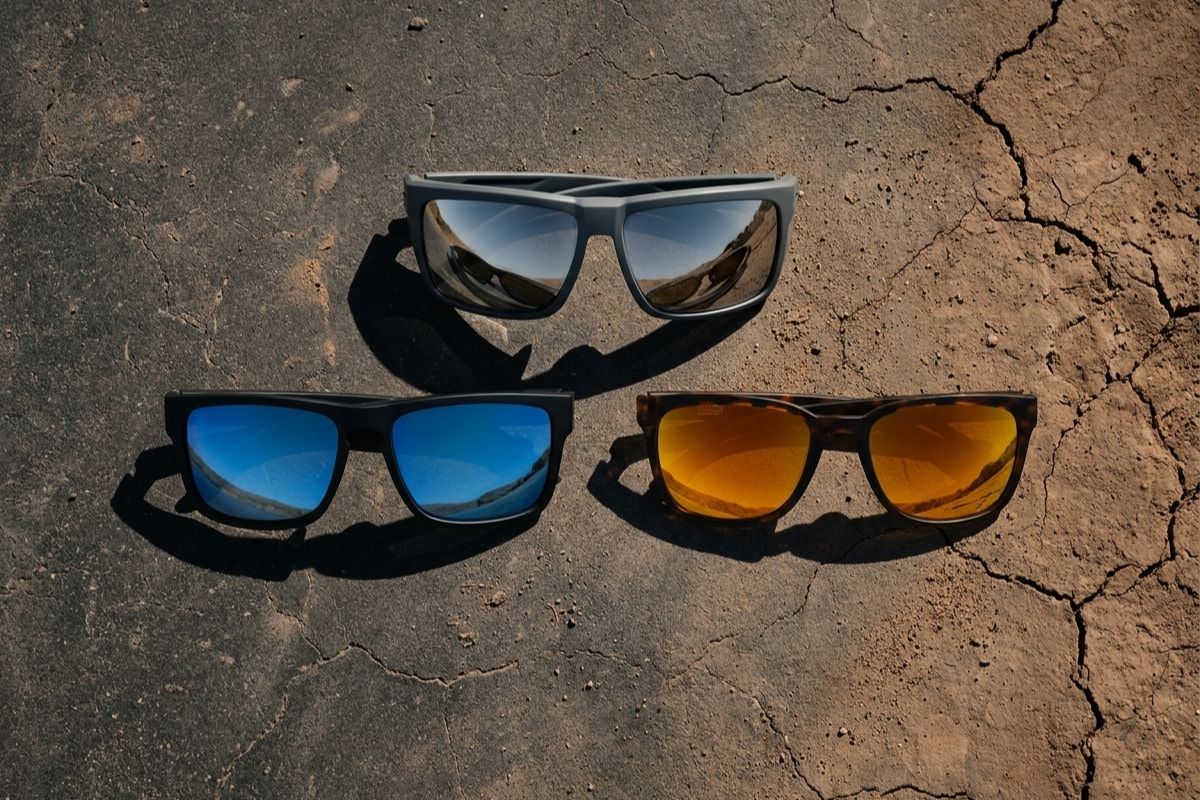
DSRT builds three sunglass models. Each one uses the lens material that matches its intended use case — not the material that is cheapest to source.
Flat profile, bio-resin TR90 frame. Built for all-day performance wear, training, and outdoor lifestyle use where clarity and weight matter most.
Shop the Phoenix →Same polyamide lens and optical performance as the Phoenix. Crystal brown and brown demi colorways for a warmer aesthetic.
Shop the Sedona →Wraparound BIO G850HI frame. Built for environments where impact protection is required. Same 32g frame weight as the Phoenix and Sedona.
Shop the Flatiron →
Frequently Asked Questions
Polyamide offers better optical clarity — Abbe value 52 vs 30 for polycarbonate — and is lighter at 1.01 g/cm³ vs 1.20 g/cm³. Polycarbonate offers higher impact resistance and is the only material that can meet ANSI Z87.1-2020 occupational safety certification. The right choice depends on whether your environment involves real impact hazards.
Polyamide (nylon) has the highest Abbe value of any performance plastic lens at 52 — meaning less chromatic aberration and less color distortion than polycarbonate (Abbe 30). For optical clarity in everyday and athletic use, polyamide is the better material.
Polyamide lenses meet FDA impact regulations and ISO 12312-1 — the standards required for consumer sunglasses. They do not meet ANSI Z87.1-2020, which is the occupational safety standard required for jobsite use. For that, polycarbonate is required.
No. According to Zeiss optical material data, polycarbonate lenses are not BPA free. Polyamide lenses are.
If you work in an environment with occupational impact hazards, buy the Flatiron — it is ANSI Z87.1-2020 certified with a polycarbonate lens. If you train, work outdoors, or want an all-day performance sunglass without impact certification requirements, buy the Phoenix or Sedona — both use polyamide lenses with Abbe 52 optical clarity.
Bottom Line
Lens material is one of the most important specs in a sunglass. It determines what you see, how clearly you see it, and what the lens can handle. Most brands skip this entirely.
DSRT builds each sunglass around the lens material that matches the job it is meant to do.
Three models. Two lens materials. Each one built for a reason.
See the Full Lineup